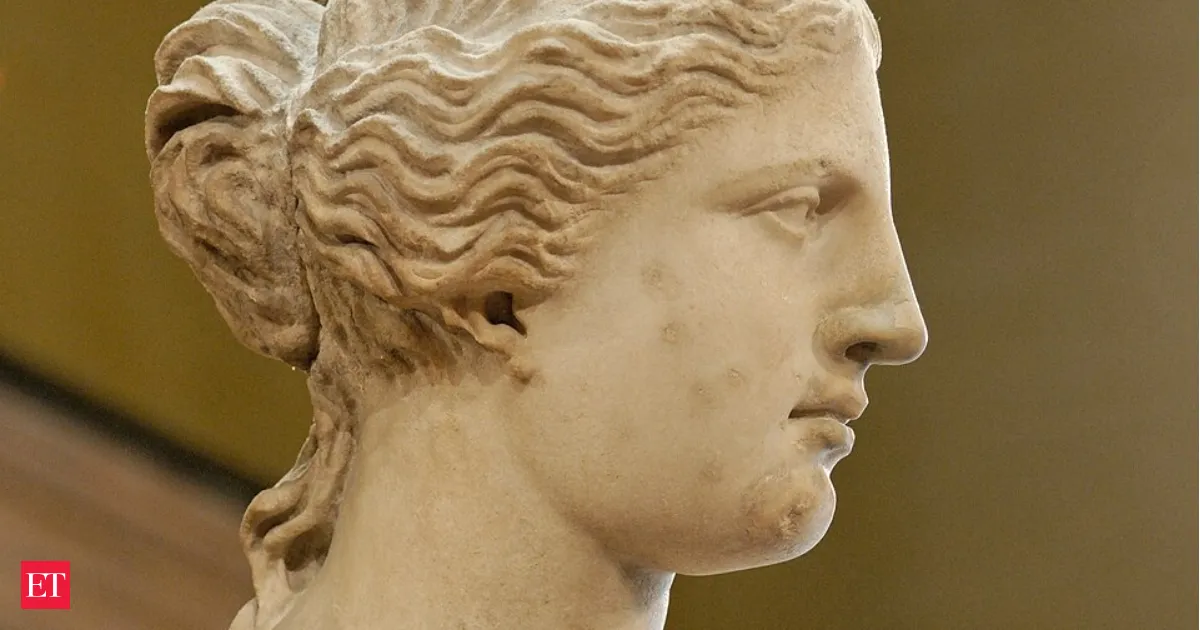
In April 1820, a farmer clearing stones in the ruins of Milos stumbled onto fragments of an ancient marble statue. The discovery, made in four pieces, was immediately recognized as valuable by French naval officer Olivier Voutier, even though the statue was incomplete and already missing its arms. Europe’s 19th-century fascination with classical Greece and Rome helped fuel the rush. After arriving in France in 1821, the Venus de Milo became a star exhibit at the Louvre, and its missing hands only deepened the mystery.
New scientific testing is upending the iconic image of ancient Greece as spotless white marble. Researchers using infrared luminescence and X-ray fluorescence found hidden traces of pigments on Greek temples and statues, including the Parthenon. Confirmed by major institutions, the findings suggest classical art was vividly painted and call for a major rethink of how we interpret that era’s aesthetics.
Your news, in seconds
Get the Beige app — every story in 60 words, updated hourly. Free on iOS & Android.
For centuries, the Oracle of Delphi captivated the ancient world, with accounts describing mysterious vapors rising from beneath the temple. Now, modern geological thinking points to nearby fault lines that could have released gases and liquids, reframing the supernatural as a natural phenomenon. The findings don’t erase the legend, but they add a measurable engine to Delphi’s enduring mystery.
Swipe through stories, personalise your feed, and save articles for later — all on the app.