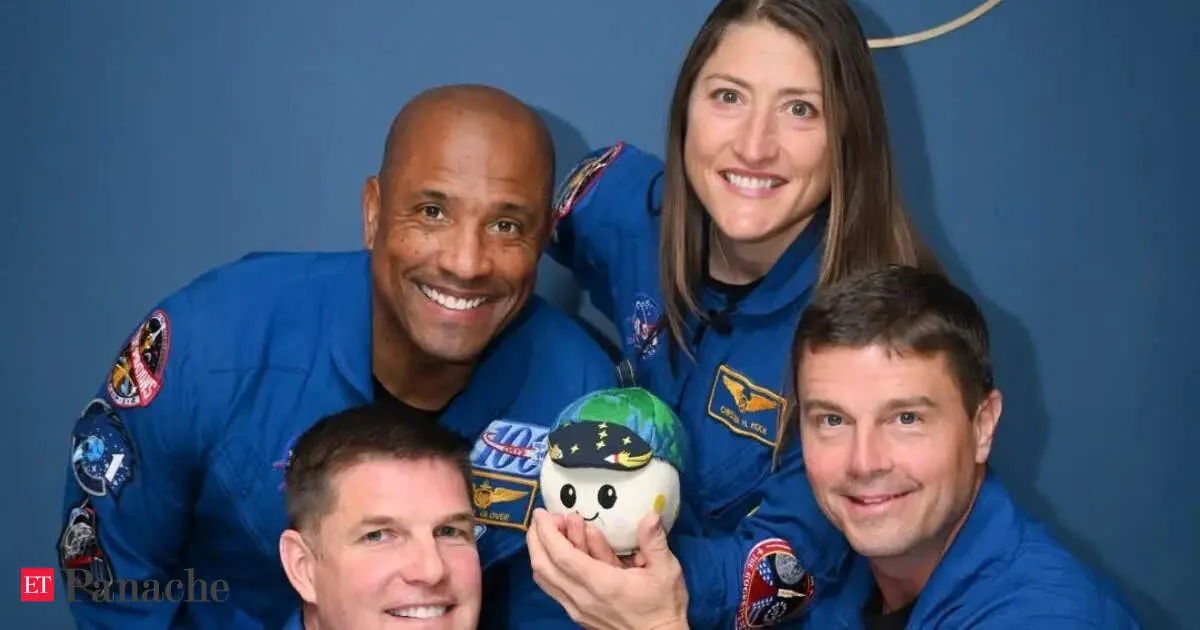
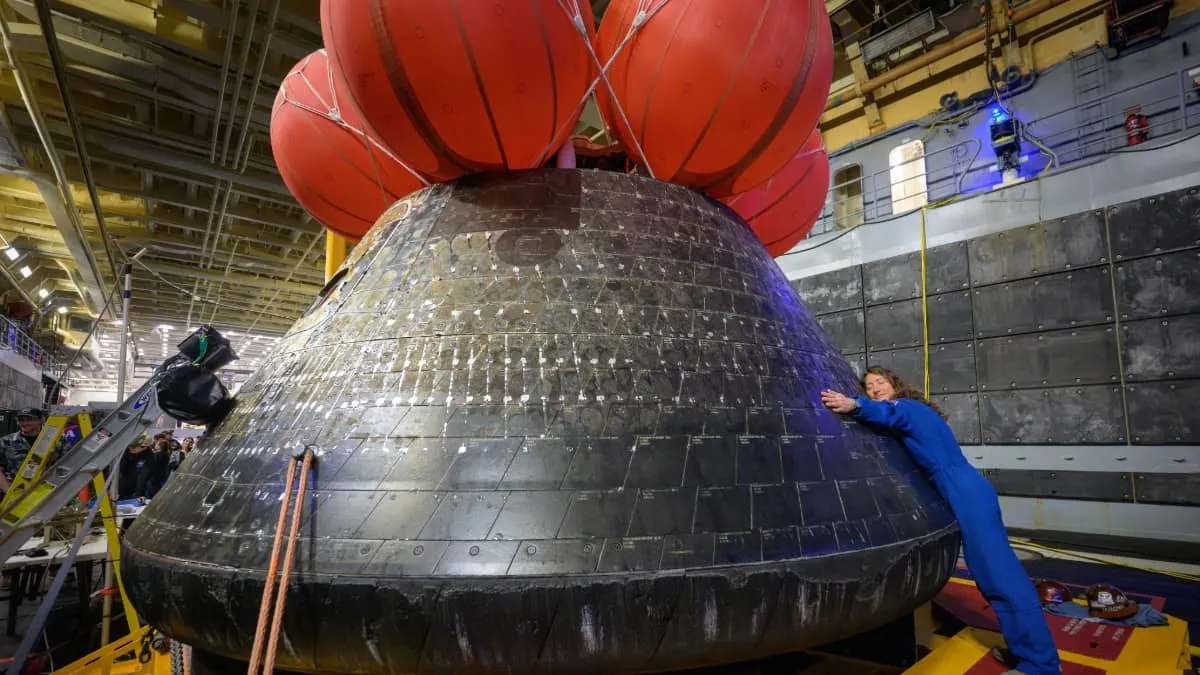
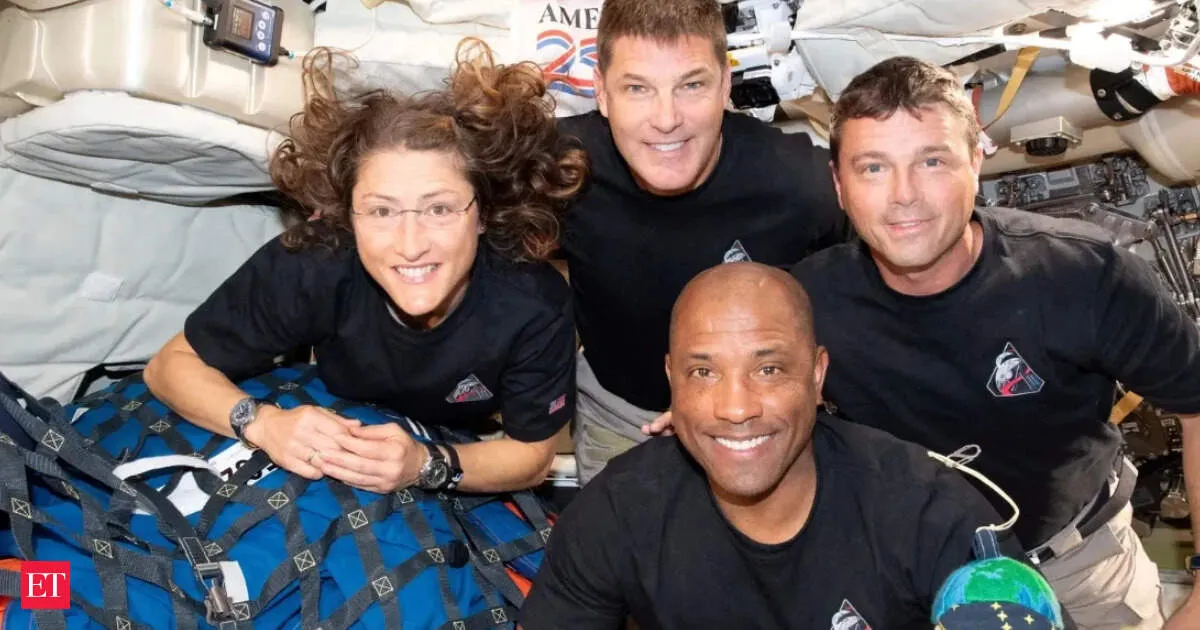
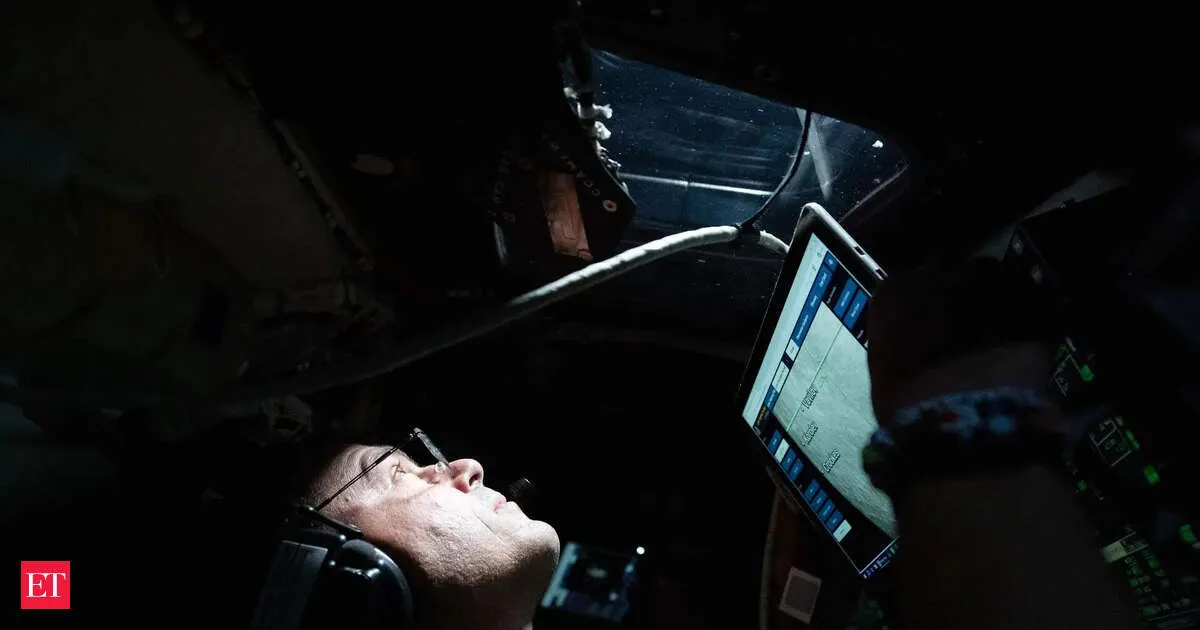
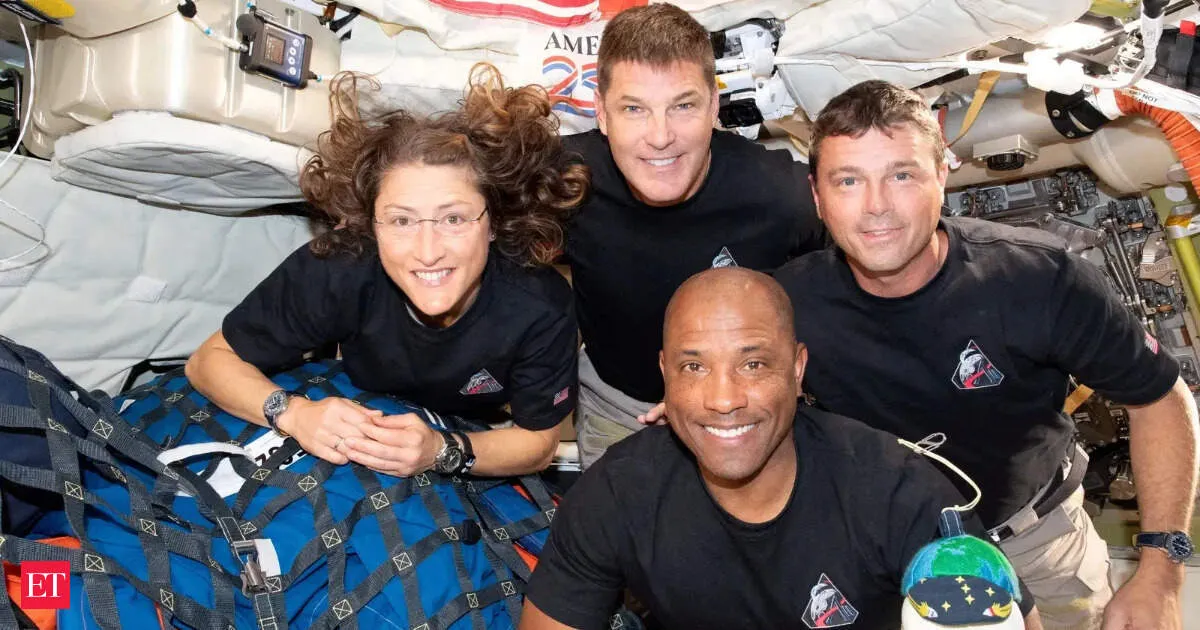
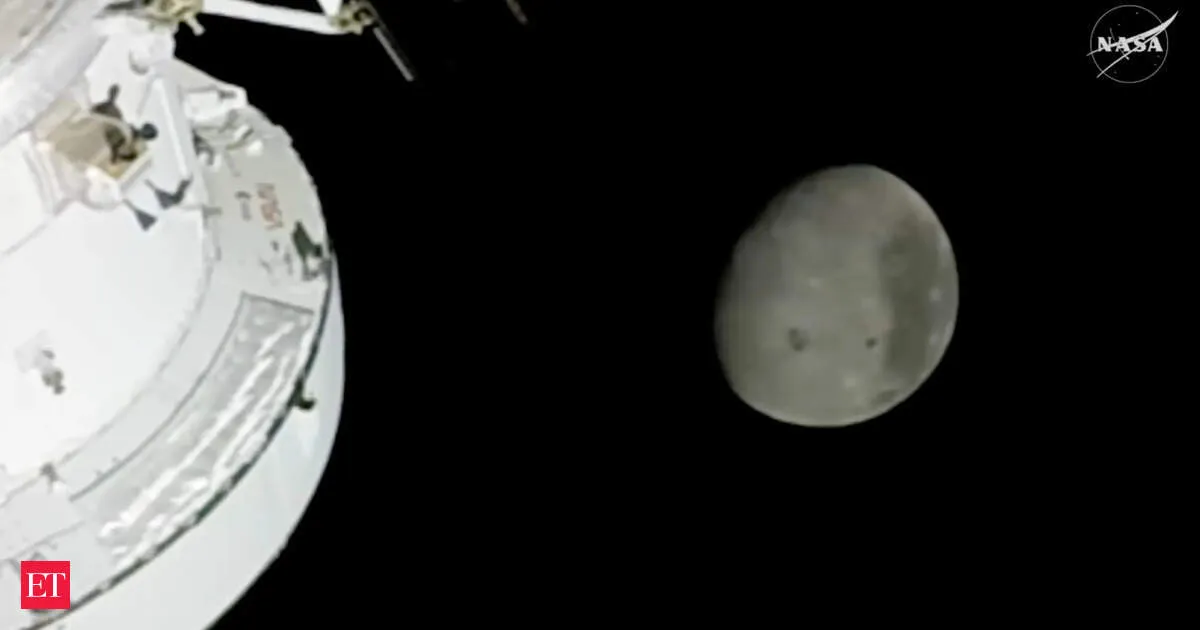
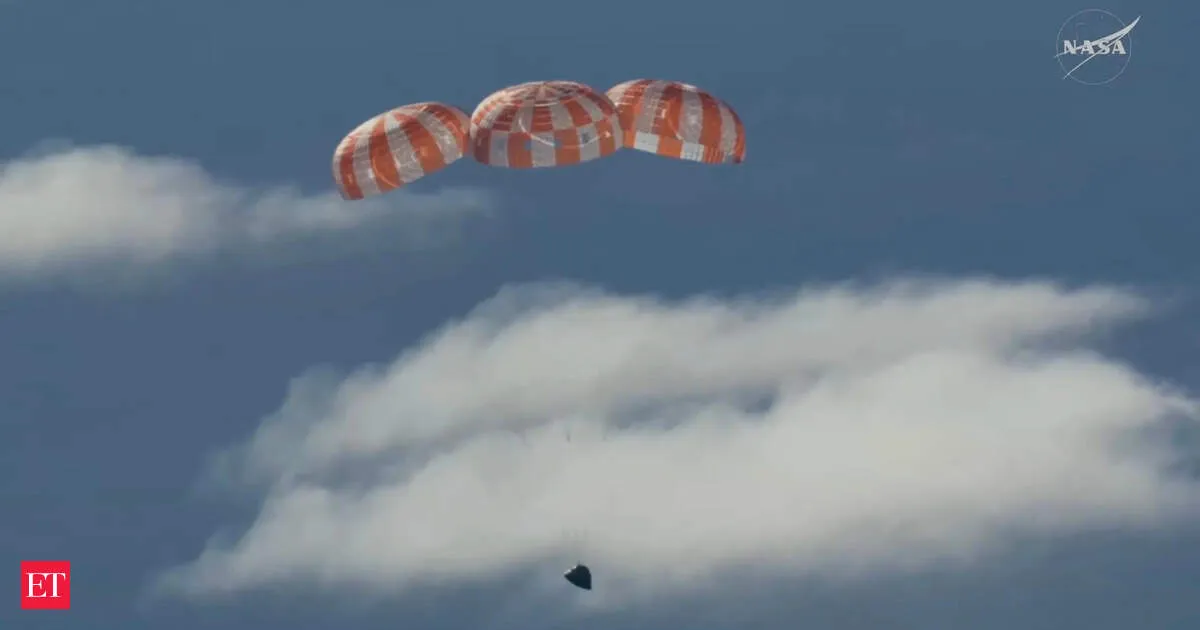
Artemis II’s Orion capsule, named “Integrity,” opened its heavy hatch after splashdown in the Pacific, signaling the end of the historic Moon mission. Astronaut Reid Wiseman shared a rare onboard video showing the emotional first moments as the crew was greeted by Navy recovery divers and the Earth recovery team, captured from within the spacecraft itself.
During NASA’s historic Artemis II lunar flyby, Commander Reid Wiseman’s crew made an unexpected choice: naming a moon crater after his late wife, Carroll Taylor. Wiseman said it wasn’t the plan, but the gesture felt right. His daughters watched the moment from Mission Control, as the mission also shattered distance records and grabbed mainstream attention.
Your news, in seconds
Get the Beige app — every story in 60 words, updated hourly. Free on iOS & Android.
NASA’s Artemis II crew module has returned to Florida’s Kennedy Space Center nearly a month after launching on the first crewed lunar mission in over 50 years. The capsule, carrying four astronauts who orbited the Moon, is now back at its start point for post-mission processing and analysis, marking another milestone in the Artemis program’s push toward sustained exploration.
NASA’s Artemis II is scheduled to launch Wednesday with three men and one woman, the first crewed journey to the Moon since 1972. The mission is designed to kick off a new era of American lunar exploration, amid global pressure and comparisons to China’s goal of landing humans on the Moon by 2030.
Artemis II’s successful lunar mission is giving scientists confidence as India prepares for Gaganyaan, its ambitious human spaceflight plan. With a target of 2027, the mission is expected to build on techniques and capabilities proven during Artemis II, accelerating India’s path toward crewed exploration. The move signals growing momentum in global human spaceflight.
Artemis II astronauts are now nearing Earth after a landmark lunar mission described as surreal and profoundly moving. As they prepare for a fiery reentry through Earth’s atmosphere, NASA and the Defense Department are prioritizing one thing: a safe return. The flight also signals a new era of lunar exploration after decades away from the Moon.
Never miss a story
Set alerts for the topics and sources you care about. Download Beige for free.
NASA’s Artemis II has drawn millions by pairing deep-space missions with real-time public engagement. Flight director Zebulon Scoville has pushed outreach through platforms like Twitch, while astronauts amplified the wonder by sharing striking views of the Moon and Earth. The strategy echoes Apollo’s cultural impact, using space excitement to build unity during a turbulent era.
Artemis II will send astronauts farther than ever, placing them in deep space radiation. NASA is monitoring their health with advanced sensors and collecting biological samples to track how radiation affects the body and mind. The findings are expected to shape safety standards for future Moon bases and Mars missions, where long-duration exposure will be a major challenge.
NASA has released fresh Earth images captured by Artemis II astronauts while en route to the Moon. Shot from inside the Orion capsule, the photographs reveal vivid planetary colours and even a striking green aurora. Coming as the mission targets returning humans to the lunar surface, the images provide a rare, firsthand perspective on Earth’s beauty from deep space.
NASA’s Artemis II crew has reached the farthest distance from Earth ever achieved by humans, surpassing the Apollo 13 record from 1970. Riding in the Orion capsule, four astronauts are on a nearly 10-day mission that revives crewed lunar travel after more than 50 years, highlighted by an unusual eclipse-linked flyby moment.
Reading on mobile?
Open Beige in the app for a smoother experience — free on iOS and Android.
Artemis II has wrapped up its nearly 10-day lunar flyby, with four astronauts and their capsule returning safely to Earth. The mission marks the first human voyage near the moon in more than fifty years, culminating in a dramatic fiery re-entry. Recovery teams are assisting the crew as NASA looks ahead to future lunar landings.
Swipe through stories, personalise your feed, and save articles for later — all on the app.