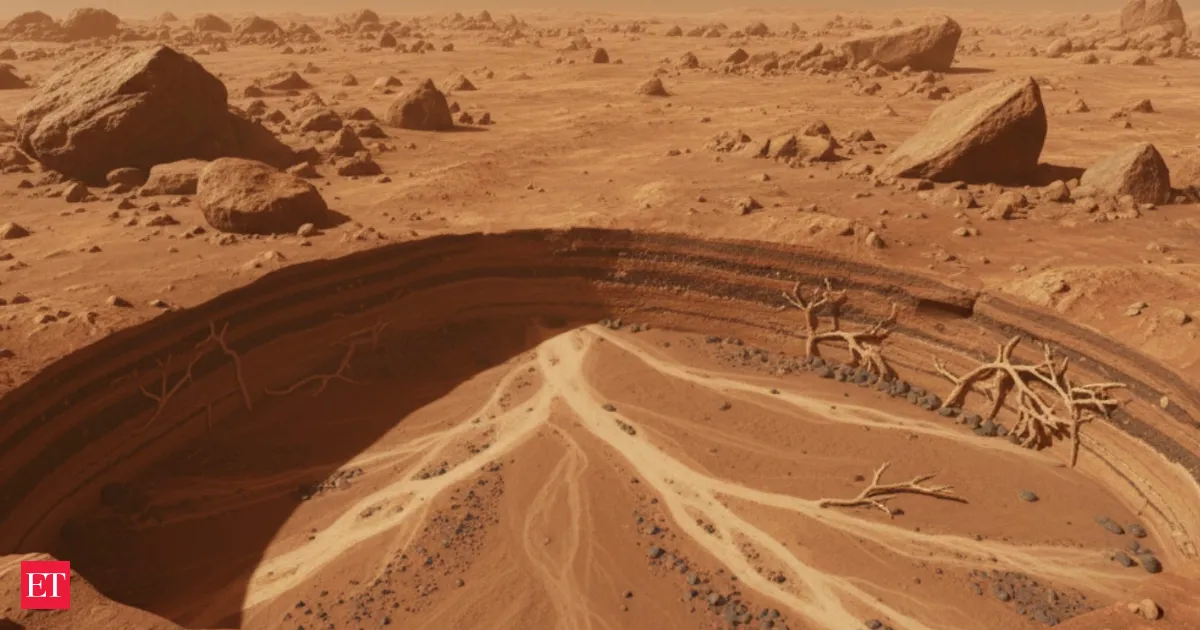
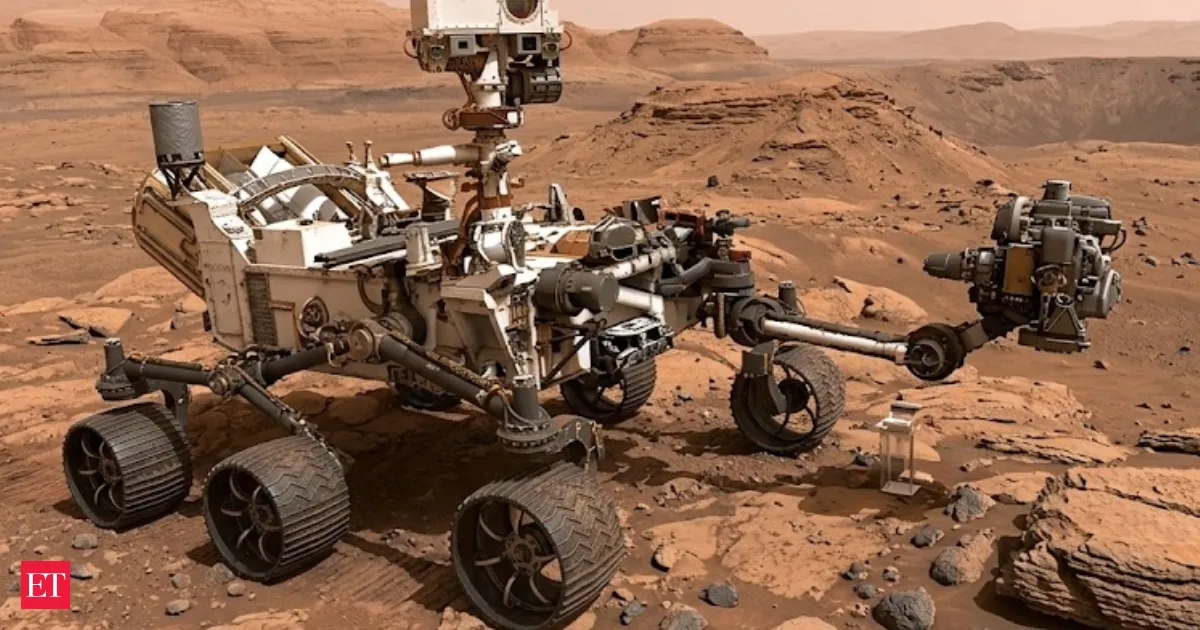
NASA’s Perseverance rover has found a buried river delta beneath Mars, with sediment layers showing water flowed long enough to deposit material repeatedly. Instead of a planet briefly wet in isolated bursts, Mars likely cycled through multiple sustained wet periods. The result rewrites its ancient climate story and strengthens the hunt for past life.
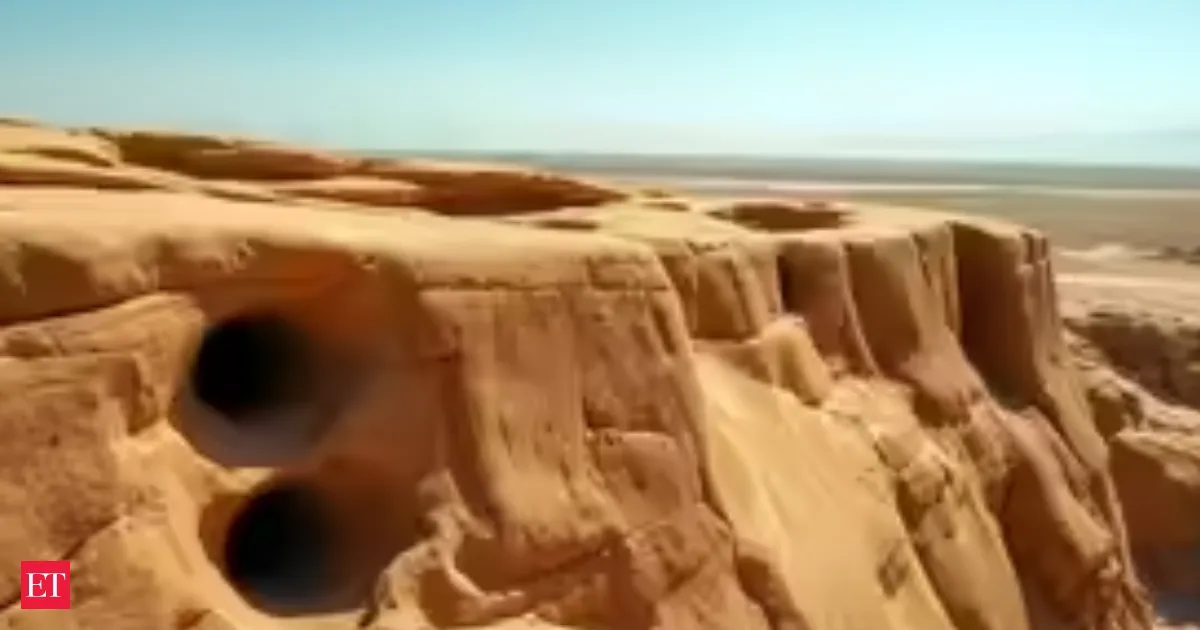
Geologists studying desert rocks report tiny, highly organized tunnels that appear inconsistent with typical natural geological processes. Instead, chemical traces in the formations point to the possibility that living organisms may have built them. If confirmed, the finding could reshape how scientists understand life in harsh environments and influence future searches for extraterrestrial life on worlds like Mars.
Your news, in seconds
Get the Beige app — every story in 60 words, updated hourly. Free on iOS & Android.
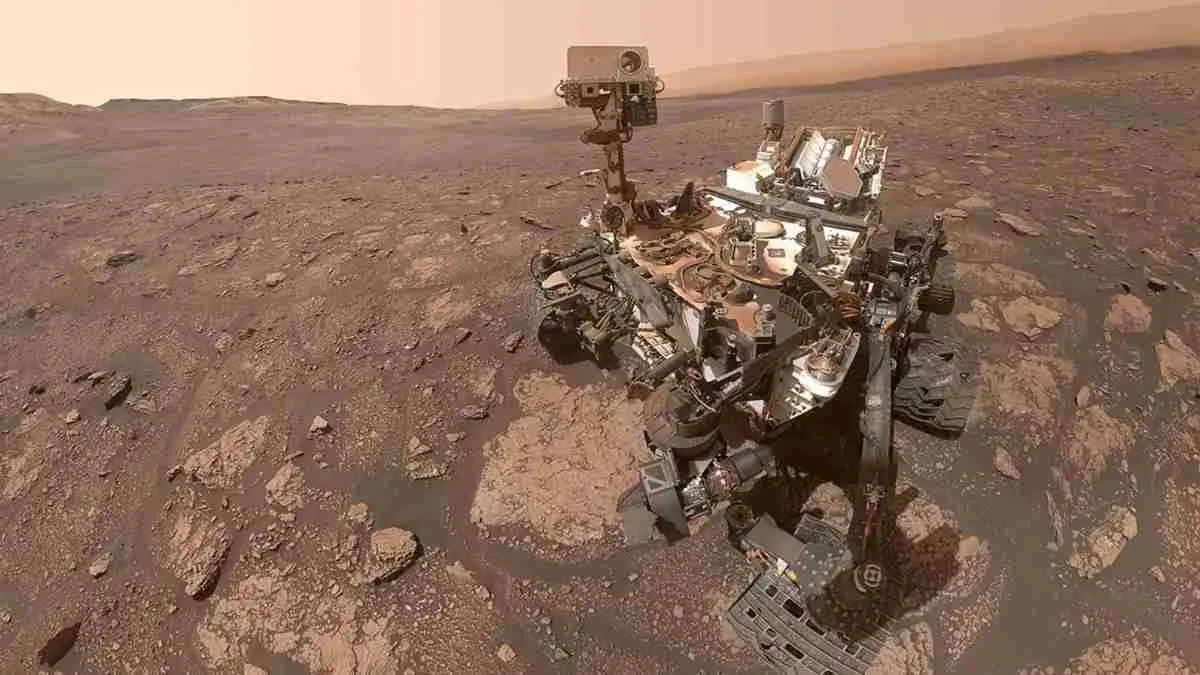
NASA says its Curiosity rover has detected the most diverse set of organic molecules ever found on Mars, including multiple compounds not previously seen on the planet. The findings come from an ancient rock sample drilled by Curiosity and bolster the case that Mars once had conditions favorable for life, even as researchers stress that this is not direct proof of biology.
NASA’s Curiosity rover has detected more than 20 organic molecules, including structures resembling proto-DNA, in Mars’ Gale Crater. Scientists say the chemistry strengthens evidence that Mars once had environments capable of supporting life. Some of the organics may even have been delivered by meteorites, adding a fresh pathway to how life-building materials could arrive and persist.
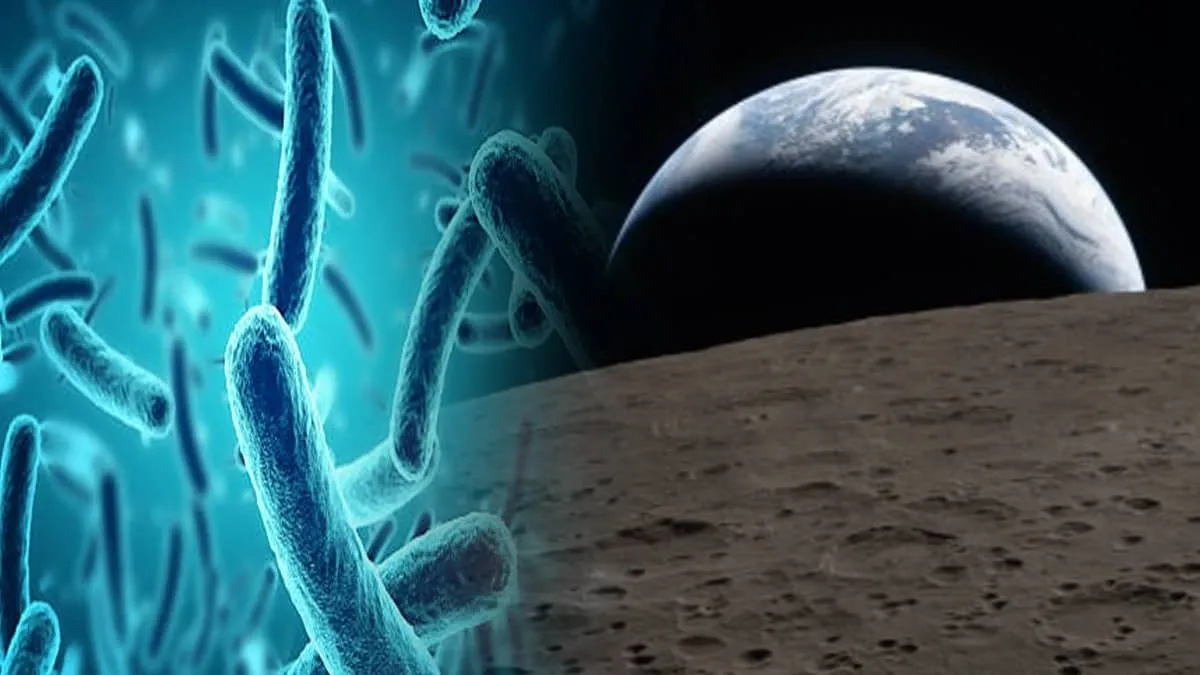
Chilean scientists are gearing up for a landmark space mission designed to see how life behaves under space conditions. The spacecraft will carry six microorganisms taken from extreme habitats such as the Atacama Desert and Antarctica, then test their survival in an oxygen free environment. Researchers hope the results will clarify how life may begin and persist beyond Earth.
Swipe through stories, personalise your feed, and save articles for later — all on the app.