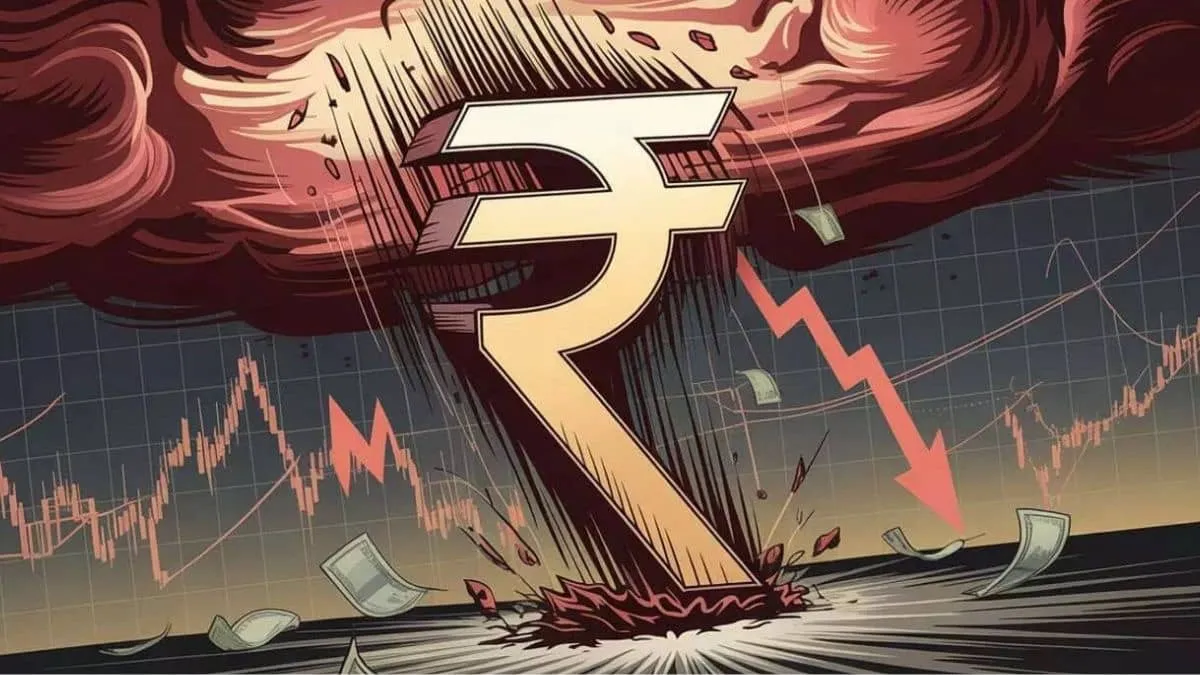
The Indian rupee slid to a lifetime low of 96.05 per US dollar on Friday, driven by crude prices hovering near $110 a barrel. Union Bank of India links the fall to a mix of elevated energy costs, aggressive capital outflows and a resurgent dollar. Stronger-than-expected US Non-Farm Payrolls lifted Treasury yields and the DXY, weakening emerging market currencies. Meanwhile, India’s trade deficit remains wide, with foreign exchange reserves lower than February levels.
Prime Minister Narendra Modi’s calls to curb energy use are being read by investors as a response to an unusually persistent oil shock. JPMorgan’s Sanjay Mookim says the crude price rise is hitting India’s external balance directly, with higher oil costs not yet fully passed to consumers, leaving government and companies to absorb much of the burden. The tougher effect, he warns, may surface in Q1 FY27 as demand tapers and capex momentum slows, shifting flows toward defensives.
Your news, in seconds
Get the Beige app — every story in 60 words, updated hourly. Free on iOS & Android.
SBI’s margin drop set the tone for PSU banks, but analysts believe the downside could be nearing an end. Focus is shifting to private banks, seen as better placed for FY27, with foreign investor flows expected to influence stock moves. HDFC Bank and Axis Bank are highlighted as top picks, while Paytm is favored for its payments business.
Swipe through stories, personalise your feed, and save articles for later — all on the app.