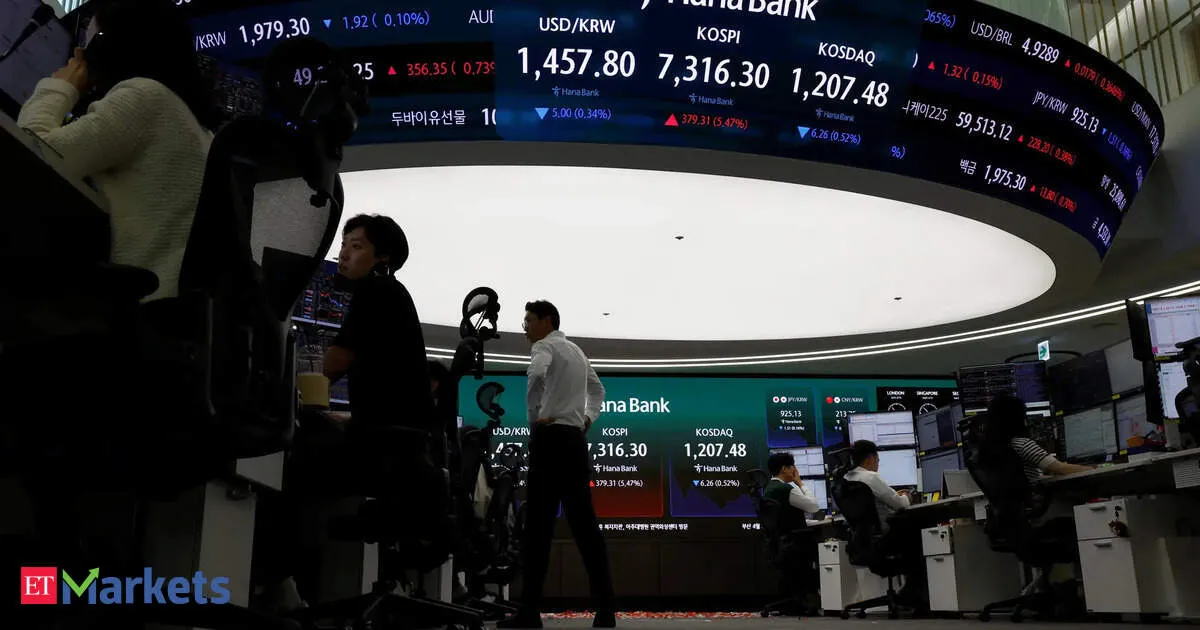
South Korea’s Kospi plunged 6% on Friday after a historic rally pushed valuations and positioning to extremes, briefly topping 8,000 for the first time. The rebound had been powered by AI-linked memory-chip demand, concentrated in Samsung Electronics and SK Hynix. Once foreign investors began booking profits, the decline accelerated because the index’s gains depended heavily on those same stocks. Samsung fell nearly 9% and SK Hynix slid 8%, while global risk concerns and higher bond yields added pressure.
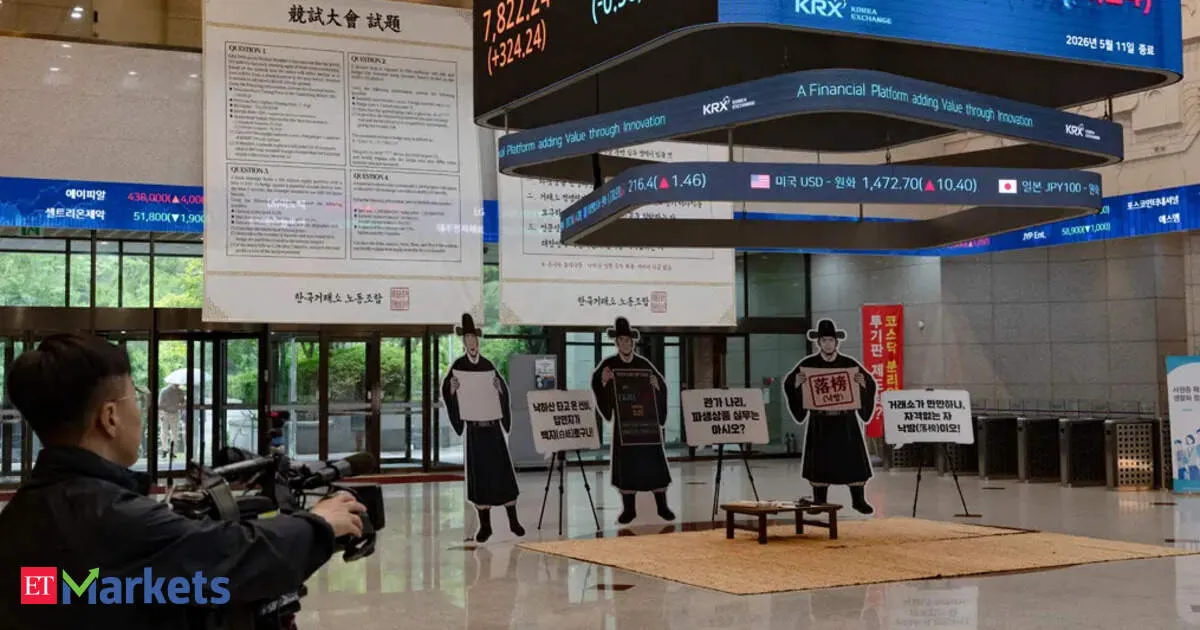
South Korea’s Kospi whipsawed sharply, briefly crossing the historic 8,000 level before plunging more than 6% as tech stocks sold off and foreign investors exited. The index erased its early gains to close at 7,493.18, while the Kosdaq fell over 5%. Samsung Electronics became the focal point after its union approved an 18-day strike starting May 21, even as the company offered fresh wage talks. The shock spread across Asian markets amid geopolitical noise and renewed US Iran pressure.
Your news, in seconds
Get the Beige app — every story in 60 words, updated hourly. Free on iOS & Android.
India’s benchmark indices jumped more than 1% on Thursday after a Bloomberg report said the government is considering cutting taxes on foreign investors’ holdings of Indian bonds. The news eased risk sentiment as the rupee rebounded from recent lows. Nifty gained 277 points to close at 23,689.6 and Sensex rose 789.74 points to 75,398.72, with Pharma, Metal and Financial Services leading. Foreign portfolio investors bought ₹187 crore of shares and domestic institutions added ₹684 crore.
India is reportedly weighing a major cut in taxes on foreign investments in bonds, a proposal backed by the Reserve Bank of India and under serious consideration by the Finance Ministry. The rationale: align with global norms, attract more inflows, and help curb the rupee’s recent slide, which recently hit a fresh record low against the US dollar.
Indian markets are staying volatile as inflation pressure and supply chain issues build toward an impending slowdown. Foreign investors are trimming exposure, adding to the turbulence. Pashupati Advani of Global Foray says investors should stay cautious, focus on strong fundamentals, and look selectively at themes like infrastructure, exporters, and pharma aligned with government spending priorities.
India’s next economic adjustment could arrive through higher fuel prices. As foreign investors sell Indian stocks, the rupee faces pressure, widening the trade deficit. The government is likely to manage demand and imports by raising duties and curbing travel abroad, with costs shared between consumers and the state—while India’s growth and low inflation provide a cushion.
Never miss a story
Set alerts for the topics and sources you care about. Download Beige for free.
SEBI has clarified that Indian banks and brokers will not be held liable for taxes owed by offshore funds, as two sources familiar with the development said. The move removes a key compliance hurdle that had slowed fund launches after earlier fears that local representatives could face penalties for clients tax demands. The clarification is expected to unblock new foreign investments.
The Indian rupee is weakening broadly across global currencies, falling as much as 25 percent in a year against nine major peers, not only the US dollar. Analysts link the slide to rising oil prices that pressure inflows and to foreign investor outflows. Further rupee volatility is expected, shaped by crude moves and geopolitical risks.
Indian stocks are slipping while several Asian markets post gains, as a global AI investment boom disproportionately benefits chipmakers such as Samsung and SK Hynix. With fewer direct AI-linked revenue streams, Indian corporates face weaker earnings growth and valuation support. Foreign investors, chasing better returns tied to AI supply chains, are redirecting flows away from India.
Foreign investors have sharply trimmed their holdings in Indian equities, citing slower earnings growth, a tech-led AI surge in South Korea and Taiwan, and a costly mix of higher oil prices with a weakening rupee. The result has been heavy outflows. While strategists expect selling to ease, they warn India may not quickly regain its former appeal.
Reading on mobile?
Open Beige in the app for a smoother experience — free on iOS and Android.
Nifty midcap indices surged to fresh record highs on Thursday, driven by strong earnings and steady retail inflows alongside bargain buying. Since the US-Iran ceasefire announcement a month ago, midcap and smallcap stocks have outperformed large caps sharply. Analysts warn the rally may pause soon, as foreign investors continue selling large-cap shares.
Retail investors trimmed holdings across most BSE 500 companies in the March quarter, mirroring market weakness driven by global uncertainty. While retail pulled back, foreign investors and domestic funds increased stakes in multiple firms. Promoters also boosted shareholding at lower prices, and foreign portfolio investor ownership in Indian companies continued to decline.
Foreign investors extended their sell-off in Indian equities into the second half of April, with financials taking the hardest hit. The outflows were linked to the sector’s large weight in markets and rising inflation concerns. Meanwhile, power and capital goods saw notable inflows, supported by strong demand and supportive global trends.
Individual investors trimmed direct equity exposure for a third straight quarter, even as mutual fund holdings climbed to an all-time high. The shift was powered by strong retail inflows into MFs. At the same time, foreign ownership slid to a 14-year low amid risk-off sentiment, while domestic institutional holdings rose to a fresh peak.
Follow your favourite sources
Track sources, tags and categories — all in the Beige app.
Indian markets may open higher next week as GIFT Nifty rises about 200 points on Friday morning. After a sharp selloff, investor focus is on crude oil prices and global developments, especially worsening sentiment tied to US-Iran tensions. Meanwhile, foreign investors have continued selling, keeping traders cautious ahead of key economic data.
HSBC downgraded Indian stocks to “underweight,” citing rising energy prices tied to the Middle East war. The bank warns the shock could cloud India’s earnings recovery and make the market less attractive than North East Asian peers. Foreign investors have also been net sellers, though HSBC points to selective opportunities in private banks, base metals and healthcare.
FY26’s primary market proved rough for new listings, with volatility and a foreign investor exodus weighing on post-listing performance. Out of 109 mainboard IPOs, only about a third delivered positive returns. A handful of names still surged, including Ather Energy and Belrise Industries, underscoring how uneven the IPO opportunity became.
Indian markets slid for a third straight session as escalating Iran US tensions pushed oil higher, dragging sentiment and pushing the Sensex and Nifty lower. Foreign investors stayed net sellers, adding pressure. While broader markets managed relatively better, IT stocks fell sharply after weak Q4 earnings, underscoring how mixed performance is reshaping investor bets.
Stay informed on the go
Bite-sized news from 100+ trusted sources, right in your pocket.
Dubai has merged real estate and residency services into a single system through cooperation between the General Directorate of Identity and Foreigners Affairs and the Dubai Land Department. The move is designed to streamline applications, cut processing times, and improve coordination for residents and investors navigating property and residency requirements.
Indian equities have trailed global peers over the past year, hurt by soft earnings, elevated valuations, and foreign investors trimming holdings. The picture may be improving incrementally as valuations look more reasonable and policy reforms, along with global shifts, could draw fresh flows. Analysts suggest a potential rebound within 12 months, with attention turning to specific sectors.
Swipe through stories, personalise your feed, and save articles for later — all on the app.