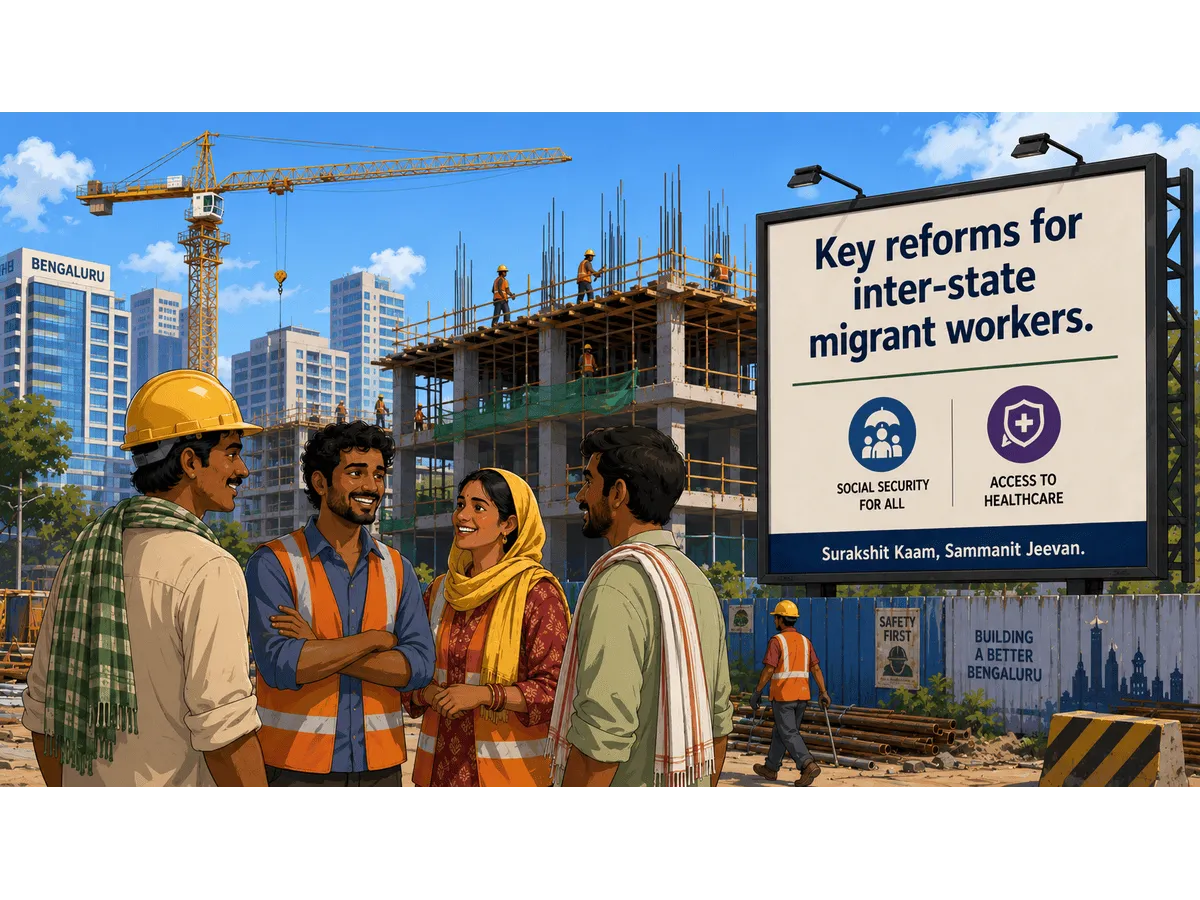
India has notified the Occupational Safety, Health and Working Conditions (Central) Rules, 2026, effective immediately, to implement the OSH&WC Code, 2020. The rules are aimed at inter-state migrant workers and mark a sharp break from the 1979 contractor-focused regime, which left self-driven migrants largely invisible. Key changes include recognizing self-moved workers, requiring standardized appointment letters, setting up a digital database, enabling portable ration cards, and introducing journey and displacement allowances tied to worker tracking systems.
India has fully operationalised four new labour codes, consolidating 29 existing laws into a single modern framework. The government says the overhaul strengthens worker protection while making compliance easier for businesses. Key promises include equal pay for equal work and universal social security, with officials positioning the move as both pro-poor and industry-friendly.
Your news, in seconds
Get the Beige app — every story in 60 words, updated hourly. Free on iOS & Android.
India has fully implemented four new labour codes by publishing the supporting rules, effective November 21, 2025. The move consolidates 29 existing laws into a single framework focused on minimum wages and universal social security. It also strengthens worker protection while easing compliance for businesses, including mandatory appointment letters and a National Reskilling Fund for upskilling workers.
Swipe through stories, personalise your feed, and save articles for later — all on the app.