PE firm Lightrock is launching its $500 million, energy-focused fund Accelerate7, aiming to back growth-stage startups across Southeast Asia, South Asia, and Sub-Saharan Africa. Lightrock expects a meaningful allocation to India, targeting companies advancing UN SDG 7 through energy storage, electric mobility, sustainable energy transition, energy financing, and related enabling tech. The fund will invest $10–$50 million per startup, backed by a requirement for commercial viability and regular impact reporting. It has already invested in Euler Motors and SolarSquare.
Blackstone and CD&R are reportedly considering bids for Magnum Ice Cream Company, less than six months after Unilever spun the brand out. The firms are watching Magnum’s share price, which has slipped from an early-year peak of 16.5 euros to around 13 euros, near its IPO level. They also plan to wait for the company’s summer sales results, a key revenue period. Unilever still holds a 19.9% stake and plans to exit within five years.
Your news, in seconds
Get the Beige app — every story in 60 words, updated hourly. Free on iOS & Android.
London-based Lightrock has launched Accelerate7, a $500 million private equity fund aimed at scaling companies tackling energy access and clean cooking across South Asia, Southeast Asia and Sub-Saharan Africa. The fund will invest $10 million to $50 million in growth-stage businesses focused on electricity access, electric mobility, energy storage and clean cooking. Accelerate7 is backed by investors and energy firms including Shell, TotalEnergies and Equinor, and has already backed SolarSquare, Sun King, Euler Motors and ATEC Global.
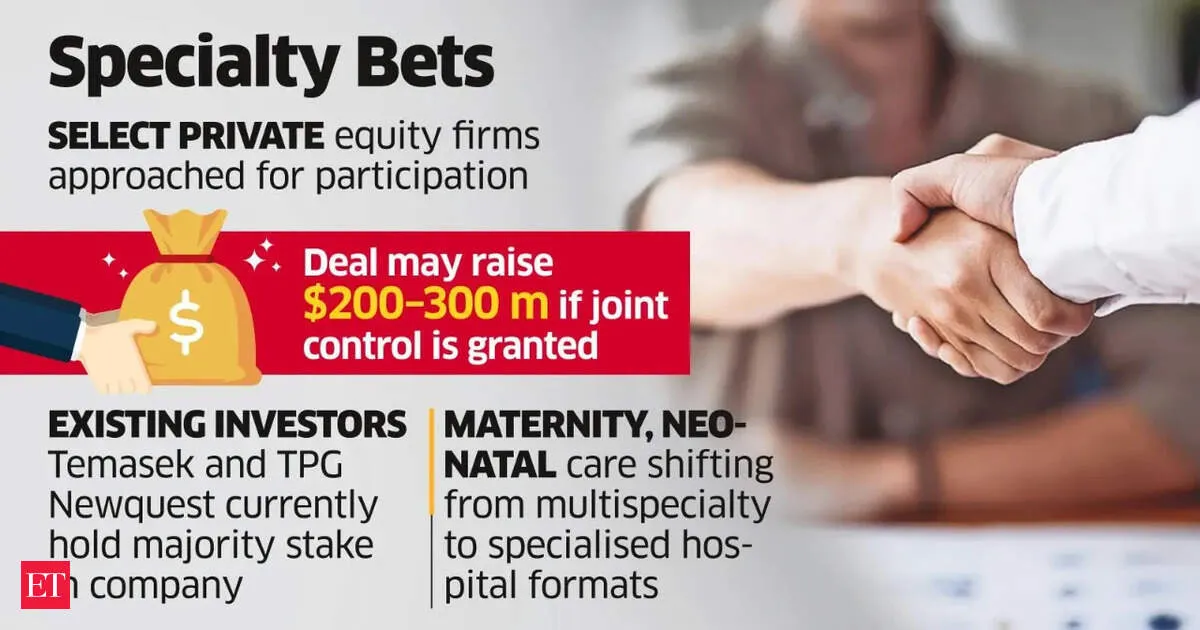
Temasek and TPG Newquest have started a fundraising process for Cloudnine Hospitals, a specialist mother-and-child care chain, valuing it at about $1 billion. Sources say the two existing investors could collectively sell 20-30% of their stake to incoming partners, potentially raising $200-300 million if new buyers receive joint control. However, joint control may be trimmed to keep founders and current investors holding meaningful stakes. The plan aligns with rising demand for single-specialty hospitals in maternity and neonatal care.
Siemens Healthineers is exiting its Indian cancer care chain, American Oncology Institute (AOI), in a deal reportedly valued between ₹1,500 and ₹2,000 crore. Potential bidders include private equity funds and Healthcare Global Enterprises. AOI runs 16 hospitals across India and one in Sri Lanka, as Siemens aligns the move with its wider strategic review amid rapid growth in India’s oncology market.
Indian law firms are handling thousands of mergers and acquisitions worth $130 billion, covering activity from private equity and venture capital to overseas takeovers. Lawyers expect strong momentum through this fiscal year and the next as companies use M&A not just for growth, but to rearchitect businesses and acquire capabilities—fueling demand for strategic cross-border legal counsel.
Never miss a story
Set alerts for the topics and sources you care about. Download Beige for free.
Applied Aerospace and Defense, a private equity backed government contractor, has filed for a U.S. IPO after reporting a 24.8% revenue jump to $498.8 million in 2025. The company posted a $17 million net loss, but investors are watching its strong growth and its position supplying critical defense hardware.
OnlyFans has struck a major financing deal, with Architect Capital buying a 16% stake for $535 million. The agreement implies a $3.15 billion valuation for the adult content platform that surged during the pandemic and helps creators earn via subscriptions. The company reportedly tops $1 billion in annual revenue, underscoring its staying power.
Apollo Global Management has crossed $1 trillion in assets under management, signaling a major scale milestone. The firm also beat Wall Street’s expectations for first-quarter profit, helped by record quarterly fee-related earnings. The update strengthens Apollo’s momentum as investors watch whether fee growth can sustain returns in a shifting markets backdrop.
Stack Infrastructure, backed by Blue Owl Capital, is reportedly exploring a sale of its Asia operations, with deal values potentially exceeding $30 billion. The move comes as Blue Owl faces investor withdrawal limits. Despite the liquidity pressure, global investors remain aggressive in Asia data centers, attracted by surging cloud computing and AI demand.
Reading on mobile?
Open Beige in the app for a smoother experience — free on iOS and Android.
TVS Capital spent two decades honing a particular approach to investing, only to question it now. The firm is reportedly looking to change course—potentially rethinking how it picks companies, supports founders, and manages risk—after concluding that what once worked may no longer fit today’s market realities.
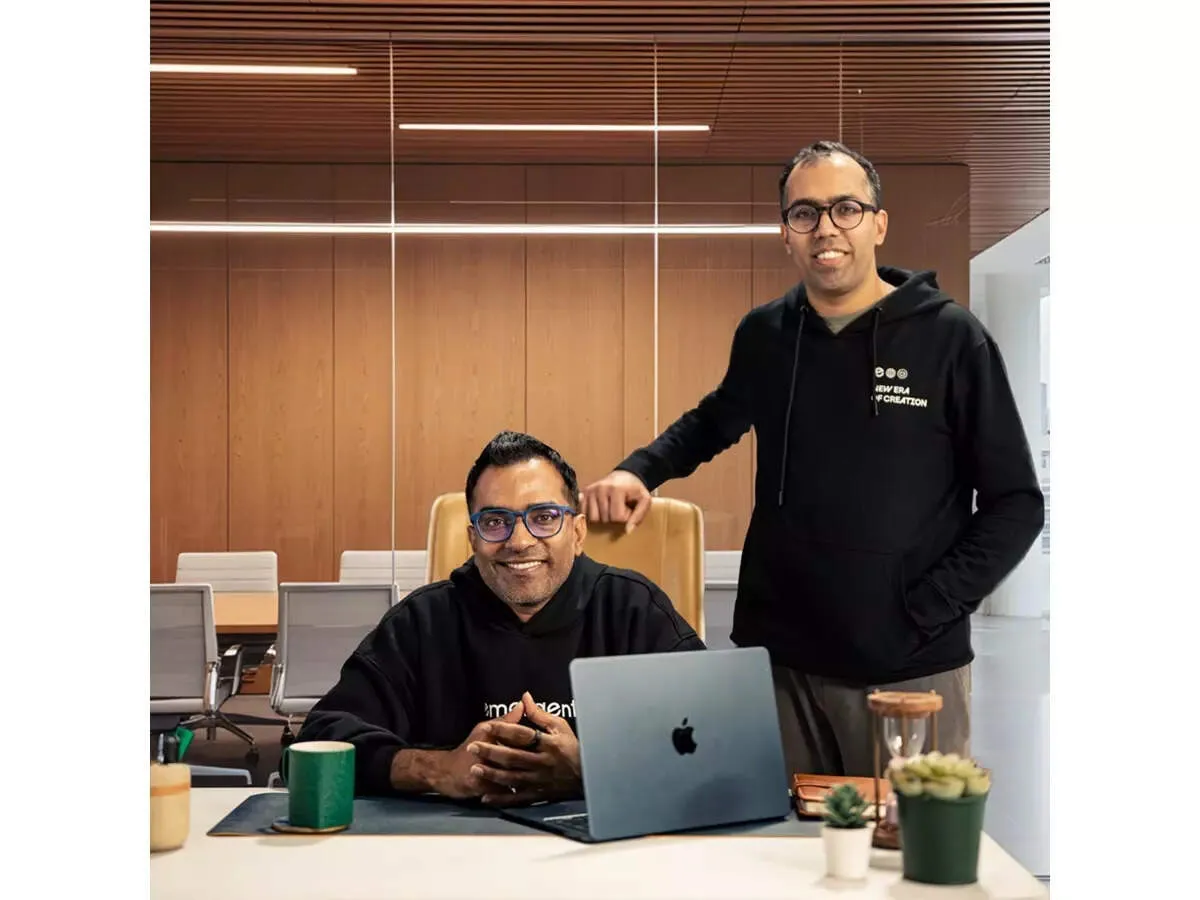
Premji Invest is reportedly in talks to invest in Emergent’s upcoming $250 million funding round, with the deal potentially valuing the coding platform at $1.5 billion. If it materializes, it would follow a recent $70 million raise only three months earlier, signaling rapid investor confidence and a fast-changing startup valuation.
OpenAI and Anthropic are partnering with private equity firms through large joint ventures, deploying billions to speed up enterprise AI adoption. The strategy thrusts them into direct competition with traditional IT services providers, including major tech giants, as they move beyond models into high-value strategy and transformation work that enterprises spend on first.
Finnish lift maker Kone plans to acquire German rival TK Elevator in a $34-billion deal, positioning it among Europe’s biggest takeovers in recent times. The agreement involves TK Elevator’s private equity owners Advent International and Cinven, plus other investors. Together, the combined company would employ over 100,000 people and generate more than 20 billion euros in annual revenue.
Follow your favourite sources
Track sources, tags and categories — all in the Beige app.
Carlyle has taken a majority stake in US revenue cycle management firms Knack RCM and EqualizeRCM, combining them into an AI-native, multi-specialty platform. The strategy uses AI plus global delivery to scale operations, improve client outcomes, and reduce financial exposure that healthcare providers face across billing, coding, and collections.
SEBI has operationalized a fast-track mechanism for Alternative Investment Funds, aiming to reduce delays in launching new schemes. AIFs can circulate their Placement Memorandums and begin fundraising just 30 days after filing with SEBI, unless the regulator flags specific concerns. The change is effective immediately, potentially speeding up PE and VC fund launches.
US private equity firm Siguler Guff has invested $40 million in Trimex Foods, the India franchise partner for brands including Chili's, Paul, and Cinnabon. The funding is designed to speed up Trimex’s pan-India rollout and help it onboard additional global restaurant brands. The move underscores growing investor confidence in India’s organized food services market.
Brigade Group and Bain Capital will form a 50:50 joint venture to develop a 2 million sq ft mixed-use project in Bengaluru. The investment is about Rs 2,200 crore and will include Grade A office space plus a five-star hotel. The development is planned on ITPL Main Road in Whitefield, near the metro station.
Stay informed on the go
Bite-sized news from 100+ trusted sources, right in your pocket.
Neo Alternative Asset Managers has hit a first close of ₹1,500 crore for its second infrastructure income fund, which targets ₹5,000 crore. The strategy focuses on de-risked infrastructure assets such as roads and renewable energy platforms to seek stable yields and capital preservation. Investor demand is buoyed by predictable cash flows and government-backed contracts.
KKR has committed another ₹1,750 crore to Baby Memorial Hospital, taking its total investment in the hospital chain to ₹5,100 crore over two years. Based in Kozhikode, the group plans to use the funds for acquisitions and expansion, expanding to nine hospitals across three southern states and targeting faster regional growth.
Swipe through stories, personalise your feed, and save articles for later — all on the app.