SEBI has issued new guidelines for Infrastructure Investment Trusts (InvITs), allowing them to take on debt beyond the existing 49% cap relative to the value of their assets. The change opens a fresh funding route for InvITs to finance capital expenditure, upgrades, and repairs across infrastructure projects. While the move could improve liquidity for asset maintenance and growth plans, it also raises fresh questions about leverage levels, risk management, and how investors will weigh the new capital structure.
India’s legacy cable and DTH operators are pushing TRAI to regulate FAST and ALTD internet-delivered linear television like traditional pay TV, arguing these services bypass licensing, tariffs, interconnection, and content obligations. The consultation follows a Ministry request in December 2025 amid fears of unregulated TV-like channels. Cable and DTH back mandatory carriage, sports signal-sharing with Prasar Bharati, and platform-neutral pricing. Meanwhile, tech and internet players oppose telecom-style or broadcasting regulation, calling it uneven for registered platforms.
Your news, in seconds
Get the Beige app — every story in 60 words, updated hourly. Free on iOS & Android.
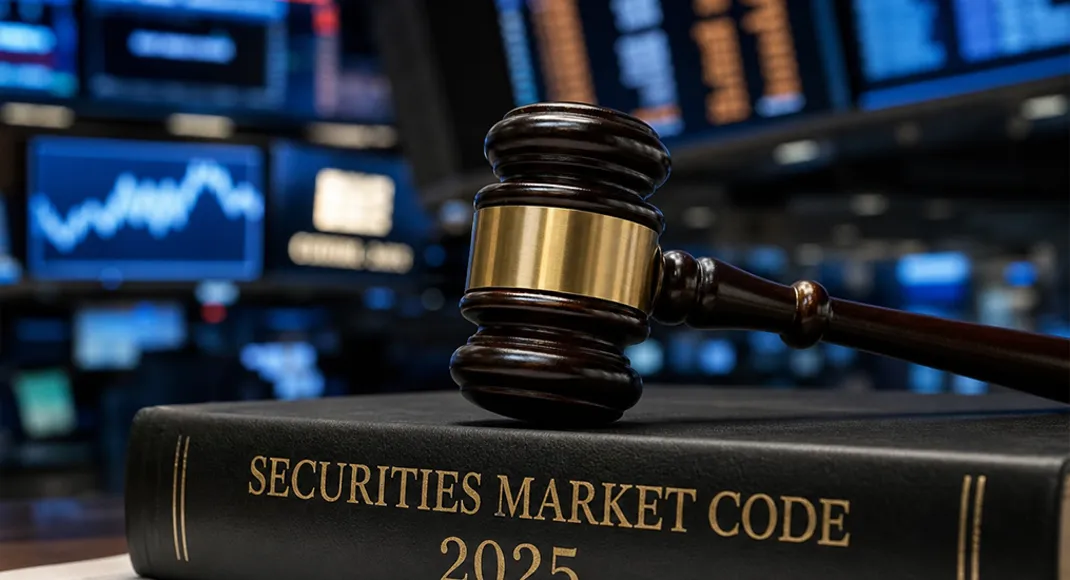
India has introduced the Securities Markets Code Bill, 2025, in Parliament on December 18, 2025, with Finance Minister Nirmala Sitharaman proposing a sweeping consolidation of securities regulation. The proposed legislation is designed to consolidate and amend multiple existing laws governing trading contracts, market oversight, and depository operations. It would bring together the Securities Contract Regulation Act, 1956, the SEBI Act of 1992, and the Depositories Act, 1996—potentially reshaping how regulators and market participants comply going forward.
Bank of England Governor Andrew Bailey says the world should expect a “wrestle” between US policy and international regulators over stablecoins, which he views as a potential financial stability risk. Bailey argues some US-issued stablecoins may not be easily converted into dollars without routing through crypto exchanges, limiting access during crises. He also warns that if stablecoins become widely used for cross-border payments, hard-to-convert tokens could flow to jurisdictions like Britain, which promise stronger convertibility obligations.
The Reserve Bank of India has cancelled the registrations of 150 non-banking financial companies, effectively barring them from conducting financial business. The highest number of affected firms are registered in Delhi (about 67) and West Bengal (about 75). The move, taken under the RBI Act, 1934, impacts lending, leasing, and investment activities tied to these NBFCs.
India’s biggest fintech firms are shifting from disruption to regulation by actively chasing multiple licences across payments, lending, and wealth management. Companies such as PB Fintech, Mobikwik, and Paytm are using licensed operations to manage the full customer lifecycle and grow revenues, helped by regulatory pressure and stronger investor confidence in compliant models.
Never miss a story
Set alerts for the topics and sources you care about. Download Beige for free.
Three former Peak XV Managing Directors have launched Mettle Capital to back Indian startups, marking a sharp new chapter after their abrupt exit from the VC firm. The move lands amid intensifying fintech pressure, with players now hunting for licences as regulatory clarity and funding dynamics shift quickly across the sector.
A new framework for outward remittances eases the process for NBFCs handling dealer tie-ups. Instead of seeking prior RBI approval, the regulatory emphasis shifts to what happens after onboarding—stronger compliance, transparency, and consumer protection obligations enforced at the regulated banks facilitating these transactions.
India’s digital lending boom is reshaping credit access as mobile apps disburse large loan volumes quickly, especially for younger borrowers and underserved regions. The same convenience is drawing tougher regulatory focus on transparency and consumer protection. Yet risks remain as the sector evolves, testing how fast growth can coexist with fair lending practices.
Meta Platforms has lost a major legal fight in Europe after the EU’s highest court ruled that it must compensate Italian publishers for using snippets from news articles. The decision strengthens the stance of Italian regulators and gives publishers a clearer path to recover investments, setting a significant precedent for how platforms handle news content across the EU.
Reading on mobile?
Open Beige in the app for a smoother experience — free on iOS and Android.
Sebi is proposing reforms to accelerate fundraising for alternative investment funds by introducing a “green channel” that lets eligible schemes begin immediately. It would also cut the waiting period for standard AIF launches. Accredited investors and angel funds are set to get more flexibility, with direct filings replacing merchant banker involvement in key cases.
SEBI has proposed expanding how Infrastructure Investment and Trust (IPF) income can be used. Stock exchanges can already spend up to 5% of IPF investment interest on defined trust and administrative costs, but depositories currently have no such allowance. The move could standardise expense treatment and tighten clarity on what IPF income can cover for depository operations.
India’s digital precious metals industry has launched the Digital Precious Metals Assurance Council of India (DPMACI) to strengthen consumer protection and trust. Chaired by Nirupama Soundararajan, the self-regulatory body will set and enforce operational and governance standards, including 1:1 physical backing verification and insured vaulting, as digital gold and silver adoption accelerates.
India is considering shrinking exclusion zones around nuclear reactors to free up land for plant expansions and encourage private investment. Regulators have reportedly given the proposal in-principle approval, with the potential to reduce land requirements and enable more nuclear capacity. Still, the move may face public and political backlash over safety concerns.
Follow your favourite sources
Track sources, tags and categories — all in the Beige app.
Meta says it will stop supporting end to end encrypted chats on Instagram from May 2026, citing low adoption and regulatory pressure. While WhatsApp will continue encryption by default, Instagram users will lose a key privacy layer that many relied on for private conversations. The change reignites the debate over how tech companies balance safety demands with user privacy.
India’s online gaming industry is seeking guidance from the Ministry of Electronics and Information Technology on new gaming rules. Firms say they need clarity on how games will be classified, what compliance is required, and how approvals will work. They also argue that without a phased implementation, both user-safety steps and regulatory adherence could become unclear and inconsistent.
A federal judge has put the SEC’s $1.5 million settlement with Elon Musk on hold after concerns about the deal’s fairness and how it was negotiated. Judge Sparkle Sooknanan is asking for more information tied to Musk’s delayed Twitter stock disclosure before deciding whether to grant approval.
Australia’s corporate regulator is urging financial firms to strengthen cybersecurity urgently after warning about new cyber threats powered by advanced AI. The regulator says these models can uncover security weaknesses rapidly, while banks and financial institutions are adopting AI faster than regulators can keep pace. The result: a growing risk gap that demands immediate safeguards.
Stay informed on the go
Bite-sized news from 100+ trusted sources, right in your pocket.
TRAI is set to tighten how telecom firms manage customer complaints. Service providers would be required to offer easy complaint registration across portals, apps, and even chatbots, plus provide regular updates on what actions they’ve taken. Under the proposal, telcos could face penalties up to Rs 50 lakh per quarter for improperly dismissing complaints.
EU countries and European Parliament lawmakers have struck a provisional deal on a watered down AI Act. Implementation for high risk systems will be delayed until December 2027, citing lower administrative costs and fairer competition. The deal still bans AI generated explicit images and requires mandatory watermarking for AI output, reshaping compliance timelines across the bloc.
Swipe through stories, personalise your feed, and save articles for later — all on the app.