Max Estates plans to generate Rs 1,200 crore in revenue from its Gurugram project, The Terraces, part of the broader Estate 361 development. Residences are set to begin at Rs 2.4 crore, while the project focuses on sustainability and facilities tailored for hybrid workers, aiming to attract buyers across age groups.
The government is pressuring manufacturers to ramp up induction cooktop production as it plans to acquire millions of units in the next 18 months. The move aims to accelerate a shift away from LPG cooking toward electricity-based cooking, signaling a major policy push on household energy choices and industrial capacity.
Your news, in seconds
Get the Beige app — every story in 60 words, updated hourly. Free on iOS & Android.
After Prime Minister Narendra Modi’s Hyderabad appeal urging citizens to reduce fuel dependence and adopt sustainable practices, multiple BJP-led states moved quickly. Uttar Pradesh’s Yogi Adityanath, Delhi’s Rekha Gupta, Madhya Pradesh’s Mohan Yadav and other CMs announced steps to cut convoy sizes and curb fuel use, with implementation reportedly beginning almost immediately after the speech.
Researchers from King’s College London and Trinity College Dublin say they’ve developed cyclotrialumane, a new aluminium compound that could act as a substitute for pricey platinum and palladium in industrial catalysts. Published in Nature Communications, the finding points to potentially cheaper, cleaner, and more sustainable manufacturing—if scaled beyond the lab.
Prime Minister Narendra Modi inaugurated India’s first functional PM MITRA Park in Warangal, Telangana, on May 10, 2026. The project, built at ₹1,695.54 crore, aims to draw over ₹6,000 crore in investments and create 24,400+ jobs. Spanning 1,327 acres, it integrates the textile value chain with multimodal connectivity and sustainability features like ZLD wastewater treatment and a planned 10 MW solar plant.
SustainKart launched in 2021 as a celebrity-backed green commerce dream, promising affordable sustainable fashion, home essentials and more. By 2023 it ran into funding trouble, investor allegations of financial misrepresentation, and a bitter founder dispute after a new venture trigger. The legal pressure intensified into an Economic Offences Wing case, and SustainKart was ultimately shut down.
Never miss a story
Set alerts for the topics and sources you care about. Download Beige for free.
A new report estimates India’s mining sector could become a major jobs engine by 2047, creating 25 million roles and adding up to USD 500 billion to the economy. The transformation, dubbed “Mining 5.0,” hinges on artificial intelligence, integrated digital systems, and more sustainable practices—pushing operators toward technology-led, value-driven operations.
India’s mining industry is starting to move beyond a compliance-only sustainability mindset toward a more proactive model expected to boost decision-making and efficiency across the entire mining value chain. A new report flags cloud and edge technologies as key to handling varied operations, enabling faster, data-driven management of complex sites and processes.
Global Energy Alliance has appointed Tanya Singhal to lead its India operations, with a mandate to scale the alliance’s work across the country’s energy systems. Her focus includes advancing clean power through battery storage, grid digitalization, and distributed energy—key pillars aimed at improving reliability and accelerating the transition to cleaner electricity.
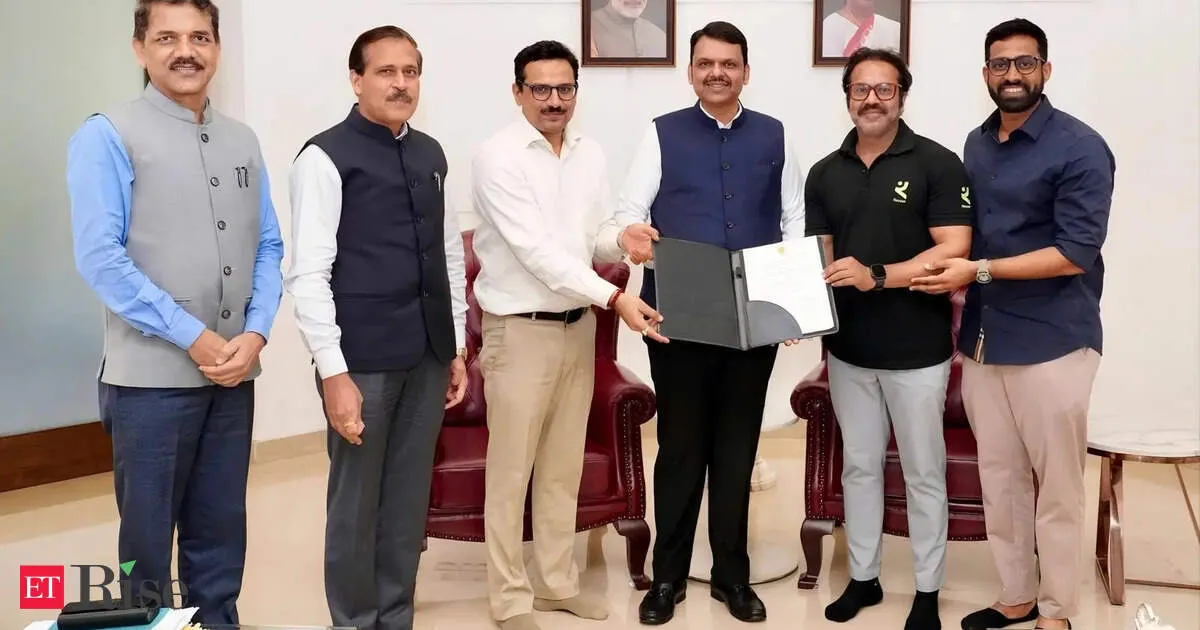
Recove has signed an MoU with Maharashtra to develop a plastic recycling ecosystem under a broader circular economy plan. The effort will begin with a Rs 35 crore facility in Jalgaon, designed to process about 1,100 tonnes of plastic every month. The move targets scaling recycling infrastructure and strengthening supply chains for waste recovery.
Reading on mobile?
Open Beige in the app for a smoother experience — free on iOS and Android.
Apple plans to invest Rs 100 crore in India to expand renewable energy capacity, partnering to develop over 150 MW. The initiative is paired with efforts to cut plastic pollution through recycling, alongside support for green startups. The move underlines Apple’s growing focus on sustainability and local innovation, tying clean power growth to broader environmental goals.
Researchers report a new way to make vitamin B12 by using controlled light to grow Spirulina, a blue green algae. The approach produces biologically active B12 and could offer a sustainable, plant based alternative to animal derived supplements. If follow up studies confirm performance, it may help address B12 deficiency worldwide and enable large scale production.
Japanese scientists say they’ve built a wearable that generates electricity from human sweat using special enzyme ink. The breakthrough could remove batteries and charging cables entirely, while still powering low-energy sensors. Once operating, the device can wirelessly transmit data—an approach that may reshape the design of future health monitoring gadgets by making them more sustainable and convenient.
PolyCycl is tackling India’s plastic waste challenge with chemical recycling that can convert hard-to-recycle plastics into valuable raw materials. The approach helps brands comply with tightening Extended Producer Responsibility norms by turning problematic waste streams into inputs for new products—aiming to reduce landfill and keep plastics in productive use.
Follow your favourite sources
Track sources, tags and categories — all in the Beige app.
In Jaipur, Prateek Tiwari is tackling summer heat by transforming unused rooftops into green spaces through his initiative Living Green Organics. The ready-to-use rooftop gardening system helps lower indoor temperatures and reduces dependence on air conditioning for thousands of homes, turning a once-empty rooftop into a natural cooling strategy.
CG Offices says it is scaling quickly, doubling revenue and targeting Rs 100 crore in the next two years. Fueled by rising demand for sustainable, high-quality workplaces, the company is expanding beyond space provisioning into a full-stack workplace partner. The strategy mirrors a broader industry shift toward integrated office design, management, and operational support under one roof.
Chimi Ongmu Bhutia, founder of Lagstal Design Studio in Gangtok, Sikkim, rose to national prominence after Prime Minister Narendra Modi mentioned her sustainable bamboo entrepreneurship in Mann Ki Baat. Her designs promote eco-friendly products and spotlight bamboo’s economic potential in Northeast India, crediting schemes like the National Bamboo Mission while pointing to ongoing gaps in funding and infrastructure.
Alcohol giants including Diageo, Pernod Ricard, Radico Khaitan, and Sula Vineyards are rethinking climate risk. With global warming pressuring water supplies, some are sourcing water from the air rather than the ground. The shift highlights how major spirits and wineries are moving fast on sustainable measures to protect production and future growth.
Stay informed on the go
Bite-sized news from 100+ trusted sources, right in your pocket.
JSW Group sustainability chief Prabodha Acharya says the world lacks a common definition of “green” steel, making claims hard to compare. If “green” is taken to mean carbon free, he argues it isn’t feasible. With different economic growth paths and production methods, he says standards must be set regionally by governments rather than relying on a single global yardstick.
Aspire Impact, an ESG impact measurement and certification firm, has secured investment from The Parinama Group and posted a post-funding valuation of ₹360 million. It appointed Saloni Malhotra as CEO of Aspire Impact Assurance and added UPES Chancellor Dr Ram Sharma to its Board of Advisors. The company says it has grown rapidly, serving major clients and planning global expansion.
Swipe through stories, personalise your feed, and save articles for later — all on the app.