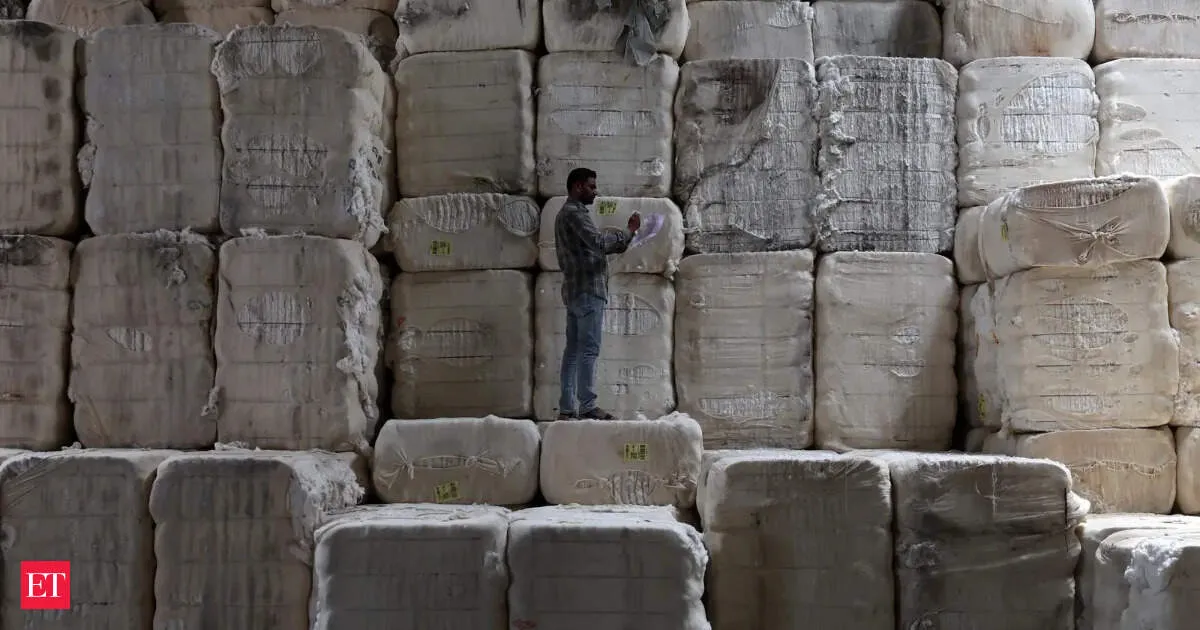
Indian textile industry bodies have asked the government to scrap an 11% import duty on raw cotton after domestic prices jumped about 25% in two months. They say this crop year’s cotton output could fall roughly 10% short of initial expectations, with current production estimated at 29.2 million bales versus domestic demand of 328 lakh bales. Manufacturers also argue they’re losing ground to Vietnam and Bangladesh, where cotton imports enter duty-free, while a newly approved ₹5,659 crore cotton productivity mission is underway.
Tamil Nadu Chief Minister C Joseph Vijay has written to Prime Minister Narendra Modi urging removal of the 11% import duty on cotton. He says the state’s vast textile and apparel export sector is in crisis as cotton and yarn prices surge, driven by cotton production shortages and higher trading activity. Cotton rose from Rs 54,700 to Rs 67,700 per candy in two months, while yarn moved from Rs 301 to Rs 330 per kg. Vijay argues duty-free imports are needed to meet export commitments and safeguard jobs.
Your news, in seconds
Get the Beige app — every story in 60 words, updated hourly. Free on iOS & Android.
Apparel industry representatives met Vice President C P Radhakrishnan and ministers, demanding removal of an 11% import duty on cotton. They warn of a projected 45 lakh bales supply-demand gap for the upcoming season, which could push up input costs and strain domestic manufacturers. The request aims to ease cost pressures and protect the sector’s competitiveness.
Prime Minister Narendra Modi inaugurated India’s first functional PM MITRA Park in Warangal, Telangana, on May 10, 2026. The project, built at ₹1,695.54 crore, aims to draw over ₹6,000 crore in investments and create 24,400+ jobs. Spanning 1,327 acres, it integrates the textile value chain with multimodal connectivity and sustainability features like ZLD wastewater treatment and a planned 10 MW solar plant.
Prime Minister Narendra Modi launched infrastructure and industrial projects worth nearly Rs 9,400 crore across Telangana, highlighting a new textile push. He inaugurated the PM MITRA Park in Warangal, billed as India’s first fully operational textile park, while unveiling road, railway and logistics projects aimed at boosting manufacturing and connectivity. The package targets faster industrial growth with textiles at the center.
Dindayal Gupta, founder and chairman emeritus of Dollar Industries Limited, died on Saturday at 88 due to age-related ailments. He founded the hosiery company in 1972 and grew it from humble beginnings into a major apparel manufacturer, reaching revenues above Rs 1,700 crore. Gupta is survived by his wife, four sons, and grandchildren.
Never miss a story
Set alerts for the topics and sources you care about. Download Beige for free.
India’s textile production fell sharply in March, with readymade garments and cotton goods hit hardest. Higher prices for raw materials, packaging and chemicals squeezed manufacturers’ margins, while Iran-war related disruptions disrupted shipments and pushed freight costs up. The combined cost shock is forcing firms to scale back output, raising concerns about how long demand and profitability can hold.
The government is examining whether to reduce or temporarily remove the 11% import duty on cotton. Officials say the intent is to ease cost pressures on domestic textile companies, amid industry concerns about input prices. Discussions are underway with relevant ministries, and no final decision has been announced.
India and New Zealand have signed a Free Trade Agreement aimed at reducing India’s reliance on a limited set of markets. Analysts say the deal can push Indian textile and apparel exporters up the value chain. With duty free access for Indian textiles and New Zealand’s premium wool imports, the pact is expected to support growth in high end garment exports while diversifying trade.
Indian cotton yarn factories are boosting production after Middle East conflict disrupted global trade routes. With the rupee weaker, Indian yarn has become more cost-effective for Chinese buyers, driving demand. Gujarat mills are gaining most due to their access to cotton and nearby ports, and many shipments are already booked months in advance to capitalize on the export surge.
Reading on mobile?
Open Beige in the app for a smoother experience — free on iOS and Android.
The government has announced GST rate rationalisation for textiles to remove distortions and strengthen exports, targeting a $350 billion industry by 2030. The move cuts GST on garments and fibres, aiming to make apparel more affordable while fixing the inverted duty structure that previously hurt manufacturers and encouraged distortions in supply chains.
STCH, an AI-first platform for fashion fabric research, is raising $5.5 million from Omnivore and Kae Capital. The startup says its “fabric GPT” can reduce trial-and-error in fabric development by accelerating design and sourcing decisions. It also plans to push sustainable textile alternatives, positioning AI as a faster, greener route from concept to material.
With the West Asia conflict weighing on trade and slowing most activity across Surat and Tiruppur textile clusters, manufacturers are bracing for tough months. Yet one Surat-based segment is turning the disruption into opportunity, tapping demand that is shifting in response to supply pressures. The result: selective growth even as the broader sector stays under strain.
GST 2.0 reforms are aimed at fixing GST-related anomalies at the fibre level, cutting costs through yarn and fabric stages, and improving overall garment affordability. By boosting demand at the retail segment—especially products priced under Rs 2,500—the changes are also expected to strengthen export competitiveness for the MMF textile industry.
Follow your favourite sources
Track sources, tags and categories — all in the Beige app.
India’s textile industry is bracing for a potential April shock as the ongoing West Asia conflict pushes up oil and raw-material costs. With margins under pressure and supply chains affected by price volatility, the sector’s ambitious growth targets are at risk, industry leaders warn.
Swipe through stories, personalise your feed, and save articles for later — all on the app.