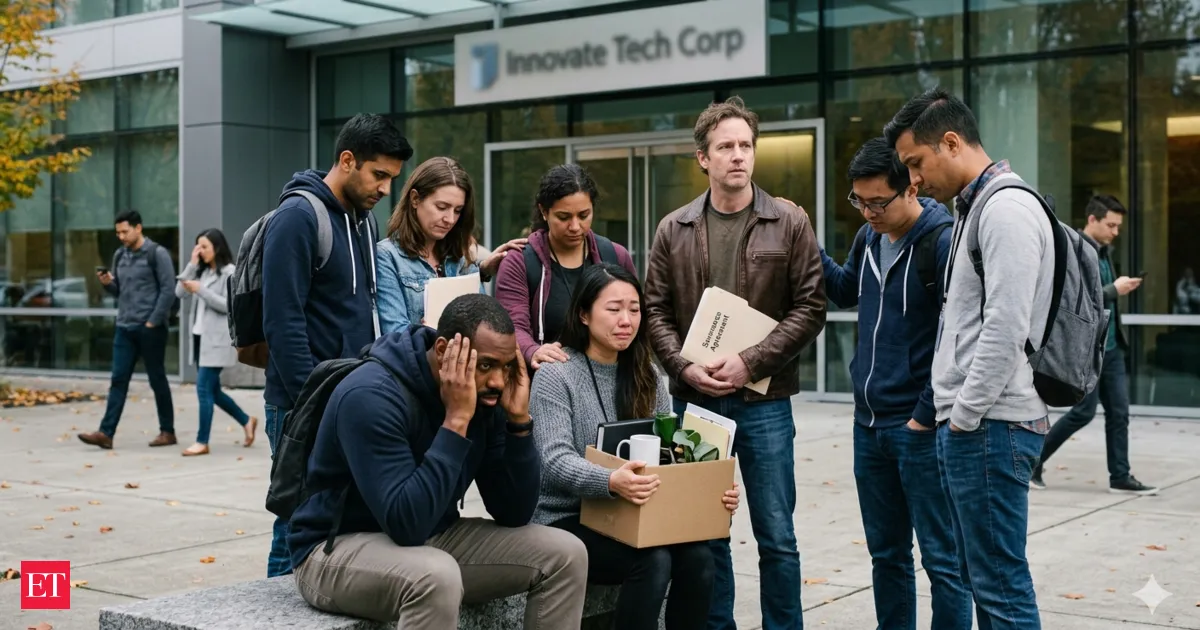
Verizon has begun another round of US layoffs, following the elimination of about 13,000 jobs last year. The company confirmed the latest cuts to a news outlet but declined to share the exact headcount affected. It said the impact is under 1% of its total workforce, with the heaviest reported effect at its Basking Ridge, New Jersey headquarters. Verizon executives say the restructuring and “leaner” operations will continue through 2026, even as the company hires for growth roles.
Goldman Sachs’ president John Waldron says the firm is rolling out generative AI “digital agents” to automate work and improve productivity, while insisting recent layoffs aren’t driven by AI. He frames the change as upgrading the “human assembly line,” adding new tech roles even as tasks get automated. The shift is linked to post-COVID adjustments and changing business needs.
Your news, in seconds
Get the Beige app — every story in 60 words, updated hourly. Free on iOS & Android.
Cisco reported a 12% year-over-year revenue jump to $15.8 billion in Q3 2026, marking its best quarter in years. But the headline was quickly eclipsed by a plan to cut around 4,000 jobs. CEO Chuck Robbins said the restructuring is meant to free capital for an AI-focused buildout, including silicon, optics, security, and enterprise AI tools.
Rising living costs are pushing Americans out of retirement and back into the workforce. A striking share of retirees say they’re working again because they simply can’t make ends meet, with financial need ranking as the top reason. The trend highlights how inflation and expenses are eroding savings faster than many planned.
Meta plans to lay off about 8,000 employees, roughly 10% of its global workforce, on May 20. The company says it will provide a “generous severance package” including 16 weeks of base pay plus two additional weeks for every year of employment. For US employees, Meta will also cover COBRA health insurance costs for up to 18 months for workers and their families.
Google-backed edtech Adda247 has laid off about 20% of its workforce, roughly 200 employees, as part of a restructuring ahead of its planned IPO in the next 12–18 months. The cuts affected teams across product, design, content and test prep, including CUET and teaching roles like UPSC and judiciary. The company expects annual savings of around ₹5 crore while saying growth remains steady in core areas.
Never miss a story
Set alerts for the topics and sources you care about. Download Beige for free.
By May 2026, more than 92,000 tech jobs have disappeared, with April bringing the worst layoffs in two years. Meta, Microsoft, and Amazon are cutting headcount, blaming AI-driven efficiencies and past over-hiring. Yet the same companies are pouring money into AI expansion, underscoring a shift where fewer roles may remain even as spending rises.
Upwork CEO Hayden Brown announced the company will lay off 25% of its workforce, citing that AI will drive how work is matched and delivered. The move signals accelerating cost-cutting across the tech and freelancing sector, with leadership warning that teams could get smaller as automation reshapes operations, roles, and demand for human-led services.
Microsoft has launched its first-ever voluntary retirement programme for eligible US employees, potentially affecting about 8,750 people as the company restructures. Staff meeting an age plus service threshold can opt to leave, with expanded healthcare support, severance tied to tenure, and accelerated vesting. The move comes alongside changes to performance and compensation reviews.
Uber and Nvidia executives say some companies are discovering that replacing workers with AI can be more expensive than expected. They point to token-based pricing that inflates usage costs, sometimes surpassing what employee salaries would cost. Despite mounting bills from AI providers, investment in automation continues, sparking debate over whether AI truly delivers cost savings at scale.
Reading on mobile?
Open Beige in the app for a smoother experience — free on iOS and Android.
As AI changes hiring and workplace expectations, institutions are moving from vague intent to verifiable capability. AI certifications are emerging as a benchmark, and structured programs like ET AI-Ready help colleges and universities assess curriculum, faculty strength, and supporting infrastructure—so graduates meet the demands of an AI-driven job market.
Cloudflare says it will cut about 20% of its workforce, affecting more than 1,100 employees worldwide, as it accelerates AI adoption. The company is shifting to an “agentic AI-first operating model,” using AI tools to reshape how work gets done. Even with stronger first-quarter results, Cloudflare expects second-quarter revenue to come in slightly below forecasts.
Tata Motors has launched a voluntary retirement scheme after union demands, allowing eligible permanent employees aged 40 to 55 to opt out. Around 300 staff have reportedly enrolled so far. The VRS offers flexible compensation choices and medical benefits, as the auto maker looks to streamline operations and reduce its manufacturing footprint.
Women’s economic footprint in India is expanding, with more female entrepreneurs taking the lead in businesses, particularly in manufacturing. These ventures are not only growing companies but also creating jobs for women. Overall, women’s workforce participation in non-agricultural work has increased, especially through own-account enterprises.
Follow your favourite sources
Track sources, tags and categories — all in the Beige app.
On demand house-help platforms like Snabbit, Pronto and Urban Company’s Insta Help are struggling to scale as gig worker supply falls during summer 2026. Mumbai, Bengaluru and NCR report fewer available slots, forcing cancellations and rescheduling. Demand is climbing fast due to dual-income households and app based hiring, but workers leave cities for harvesting and are harder to retain.
A working paper from the Prime Minister’s Economic Advisory Council argues that India must treat childcare and eldercare as core economic infrastructure. It proposes a dedicated funding mechanism, better pay and conditions for care workers, and policy changes to shift care from a private responsibility to a formal sector. The report forecasts demand for care workers will exceed 30 million by 2050.
India’s Prime Minister’s economic advisory panel is calling for a sweeping revamp of the care sector, warning that demand for caregivers could exceed 30 million by 2050. It proposes a dedicated fund, rapid creation of a skilled workforce, and channeling corporate social responsibility money into care projects—aiming to expand jobs while supporting families and tackling rising care needs.
Coinbase says it will lay off about 14% of its workforce and restructure the company around AI priorities. The move follows a broader wave of tech job cuts as companies automate parts of product and operations. While Coinbase frames the change as efficiency and faster decision-making, employees and observers are asking what roles are being eliminated and what skills are being prioritized.
Stay informed on the go
Bite-sized news from 100+ trusted sources, right in your pocket.
An EAC-PM working paper, Re-imagining the Care Economy, reframes care work from a private burden to social and economic infrastructure. Co-authored by economists and policy experts, it projects India’s domestic demand for care workers could surpass 30 million by 2050, with international demand also rising—making care a major labor market challenge and opportunity.
SIS Ltd, the security and facility management company, is aiming for Rs 20,000 crore revenue by FY27, driven by network expansion and the impact of new labour codes. The firm says it is leaning into AI to improve customer service and operational efficiency while planning a major workforce expansion, targeting 5 lakh employees by 2030.
Swipe through stories, personalise your feed, and save articles for later — all on the app.